
In Search of Nijinsky
Published in Limelight, June 2025
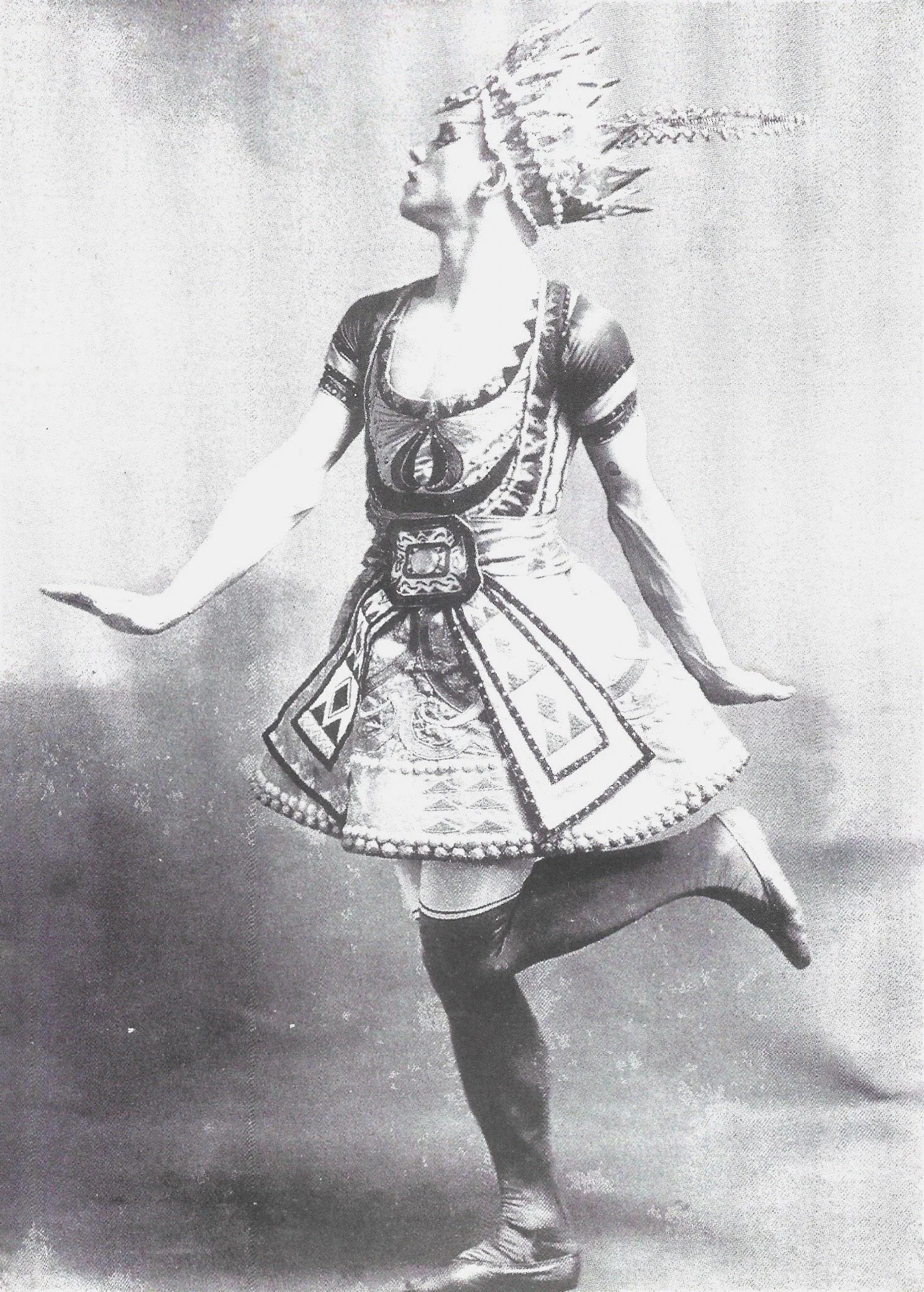
Paris, 1912: Vaslav Nijinsky strikes a pose
Vaslav Nijinsky
Vaslav Nijinsky (c. 1889-1950) was a dancer and a choreographer with the Ballet Russes, a troupe of dancers from Moscow that arrived in Paris in 1910, transformed the artform and heralded the dawn of the modern ballet company. He was lionised for his prowess and magnetic stage presence, although off-stage he was diffident and introverted, a cuticle-picker. His choreography challenged dancers to express themselves physically in new ways, notoriously so in Le Sacre du Printemps (1913). Thus, he was a bellwether not only in the realm of ballet but also in the broader story of Modernism. Sadly, his career was truncated when he succumbed to grave mental illness. He gave his last performance at the age of 30.
Tamara Nijinsky and Kinga Nijinsky Gaspars
In Melbourne in 2001, arts writer and balletomane Jill Rivers was introduced by a ballet friend to filmmaker Paul Cox who was making a film of the extraordinary diary Nijinsky wrote in 1919 while entering psychosis. The idea of Jill writing a book on Nijinsky’s life came up and Cox loved it. He was in touch frequently with his second daughter, Tamara Nijinsky, as she was consulting on the film. He arranged for Jill to stay with her as part of her research and the film company, Music Art Dance Films, paid for her airfare. Jill was not one to pass up on marvellous, unforeseen opportunities. ‘Before I knew it,’ she said, ‘I was on a plane to Pheonix, Arizona’ to meet Tamara and her daughter, Kinga Nijinsky Gaspers.
The Nijinsky women were waiting for her at the airport with flowers and a sign that read ‘Cox film. Welcome Jill!’ She stayed with Tamara for five days, which entailed sleeping in a fold-out bed in her study that was dominated by a photo of her father at the age of 17. I asked her what that was like. ‘Bizarre,’ she replied.
The houses of both women were full of exhibits and memorabilia of Nijinsky and his wife, Ramola de Pulszky (1891-1978). Jill was fascinated by the photographs and paintings and by Nijinsky’s own drawings. She interviewed Tamara at length formally and had long, engrossing conversations with them both. They were a pulsing, breathing link to the glories of Imperial Russia in the Arizona desert. They were highly protective of Nijinsky’s legacy. They especially loathed the film from 1978 by Herbert Ross titled Nijinsky as ‘a gross misinterpretation of the facts.’ Otherwise, they were generous, warm, unassuming, ‘a normal American family.’
Back in Melbourne, it was time to start writing.
Jill could draw upon her own experience of the daily travails of life in a ballet company. From 1988 to 1998, she served as Media Director at The Australian Ballet. ‘It was a seven day a week job,’ she told me. ‘I put everything I had into it.’ The role proved to be life changing. She formed lasting friendships within the company and the international dance community. ‘Dancers are the happiest people I know, and I gained so much from connecting with them and the artform.’
She wrote in bursts until she completed a full draft but didn’t pursue publication. She wanted to do a full retelling of Nijinsky’s life, but she was conscious of the sensitivities of the Nijinsky women and keen to avoid their disapproval. While Paul Cox continued to seek her views as the film progressed, she quietly set the book project aside.
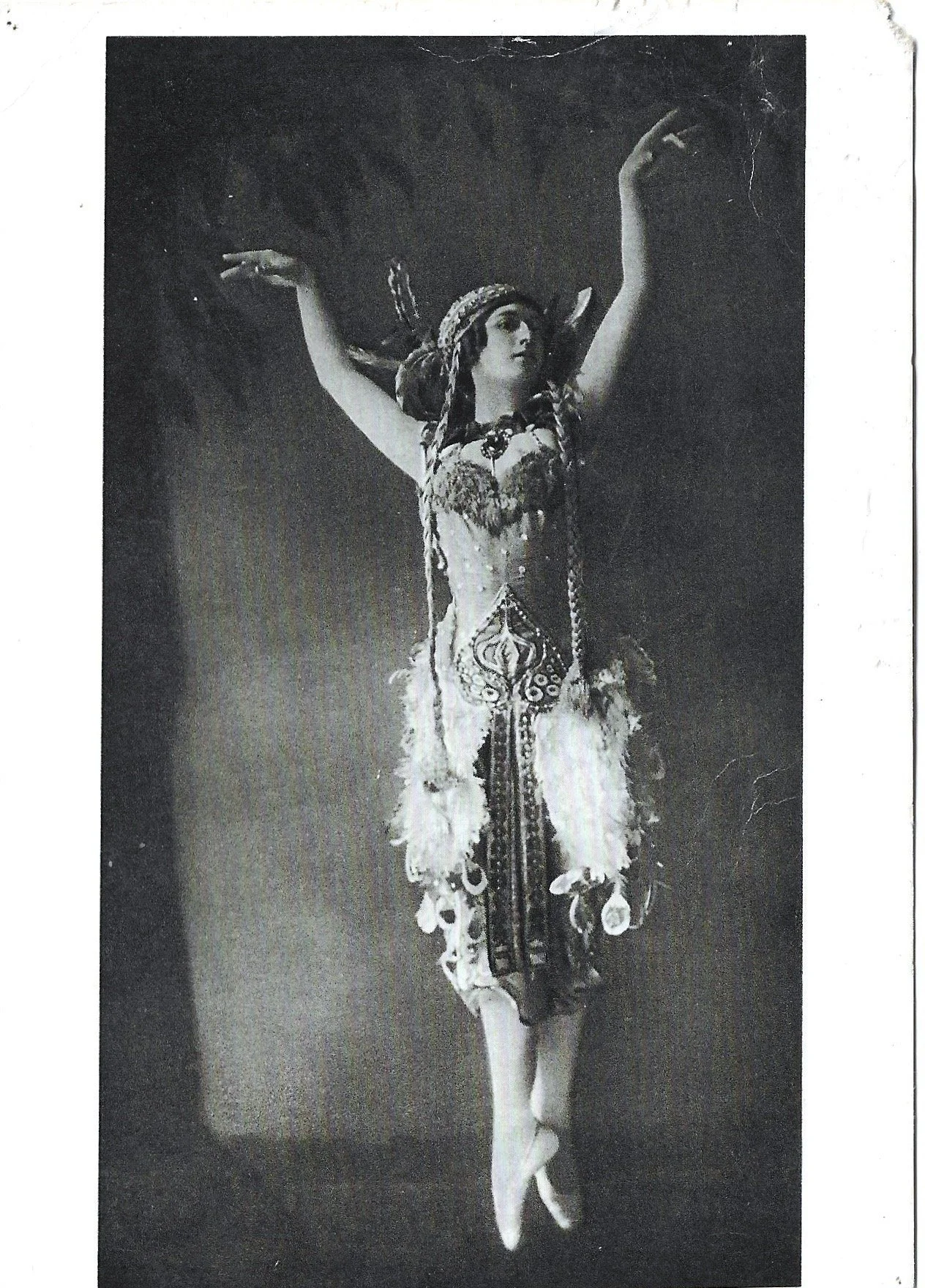
Paris, 1910: Tamara Karsavina in the lead role of The Firebird, the ballet that ignited a new passion for the artform Europe. Photographer: Emil Otto Hoppe
Vaslav Markevitch
Nijinsky had another living grandchild, Vaslav Markevitch, who was the son of his first daughter, Kyra, and the composer and conductor, Igor Markevitch. He lived in Tuscany and had little contact with the rest of the family. When Jill mentioned him to Tamara and Kinga, they were dismissive, telling her he was ‘mad’. Nonetheless, she retained a niggling feeling that the story was incomplete without him.
In 2005, she discovered that the internationally renowned conductor Christopher Lyndon-Gee was writing a biography of Igor Markevitch. So, she approached him and enquired about Vaslav Markevitch. He kindly brokered an introduction between them. Once again, she found herself flying off for a fleeting glimpse of the shadow of Nijinsky, this time to Florence.
She took a train to the town of Chiusi where Vaslav Markevitch was waiting for her. In the book she describes him as ‘as a quaint combination of English/European gentleman and eccentric Bohemian/Russian count.’ He had arranged for her accommodation in the nearby village of Acquaviva close to his villa in the Tuscan countryside. The arrangement was for Jill to interview him over the course of that day and the next.
If Nijinsky’s second daughter and granddaughter were unassuming and normal, his grandson was decidedly odd. ‘My visit teetered on near disaster,’ Jill writes in the book. She found his conversation ‘bright and sharp’ and she could ‘hardly get a word in edgeways,’ but at first all went smoothly.
At lunch the following day, the conversation took an unexpected turn. He not only told her he knew the secret to controlling the climate but also that he was an extraterrestrial being who receives messages in the night through the numbers on his watch. When he drove her to his villa to continue her interview, he declared that Tamara was not Nijinsky’s daughter but the result of an affair that his grandmother Ramola had with Dr Frankel, Nijinsky’s doctor. He knew because she had told him on her deathbed. At the villa, he suggested that Jill was not appropriate to be his third wife (he was twice divorced) and then accused her of exploiting the Nijinsky name. ‘You have no culture, you Australians,’ he said. He abruptly disappeared into the villa. She retreated outside, shocked and panicky, ‘trapped in his garden in a surreal situation with no phone or means of escape.’
Within an hour or so, Markevitch reappeared and drove her back to Acqaviva. The following morning, he was calm but didn’t apologise. Jill writes that his explanation was that she had ‘copped the end of people pilfering his information.’ It turned out he too wanted to write a book.
Back home, she added the encounter to her manuscript and then put it on pause for another 20 years. She fiddled with the words from time to time, but otherwise it remained unfinished business.
In late October 2024, she decided to self-publish at last to coincide with the public interest that would be generated by John Neumeier’s astonishing Nijinsky to be presented by The Australian Ballet this year. She titled it The Genius of Nijinsky. I asked her what she thought of her writing after such a long break. ‘I loved it,’ she said. ‘I put an enormous amount into that book and worked on it for a long time.’
I asked her who she wrote it for and she told me about a ballet master—‘I don’t wish to name names’—who confessed he didn’t know much about Nijinsky. So, she wrote ‘for the dancers of today because they need to be informed of their history.’ For that reason, she included a chapter on the history of Russian ballet up to the advent of the Ballet Russes. It was ‘the hardest part to write as I had to be so careful about getting it right.’
The retreating shadow
Tamara Nijinsky died in 2017, and Vaslav Markevitch died in 2024. With their passing the second and part of the third generations have gone, and the connection to Vaslav Nijinsky recedes ever distant. Jill Rivers is perhaps unique within the Australian dance community in having had the chance to meet them. Those opportunities were unrepeatable and her stories about them enrich the book with a lively quality of memoir. She came within touching distance of Nijinsky. What a gift.
The Genius of Nijinsky was published in June 2025. It can be ordered at Art-Full Living
